


Record wall lengths, skirting, outlets, switches, windows, and door swings on both sides. Confirm whether the corner is truly square. A freestanding triangular unit may tolerate irregular walls, while fitted or wraparound shelves require more precise geometry and fixing conditions.
Corner Bookshelf Ideas That Turn Corners into Useful Storage
Explore corner bookshelf ideas for overlooked angles, reading areas, and rooms with limited wall space. Compare floating shelves, L-shaped units, triangular towers, curved forms, and wraparound shelving by reach and capacity. Select references that match the corner geometry and nearby furniture, then generate a coordinated direction in PromeAI.
Explore Corner Bookshelf Ideas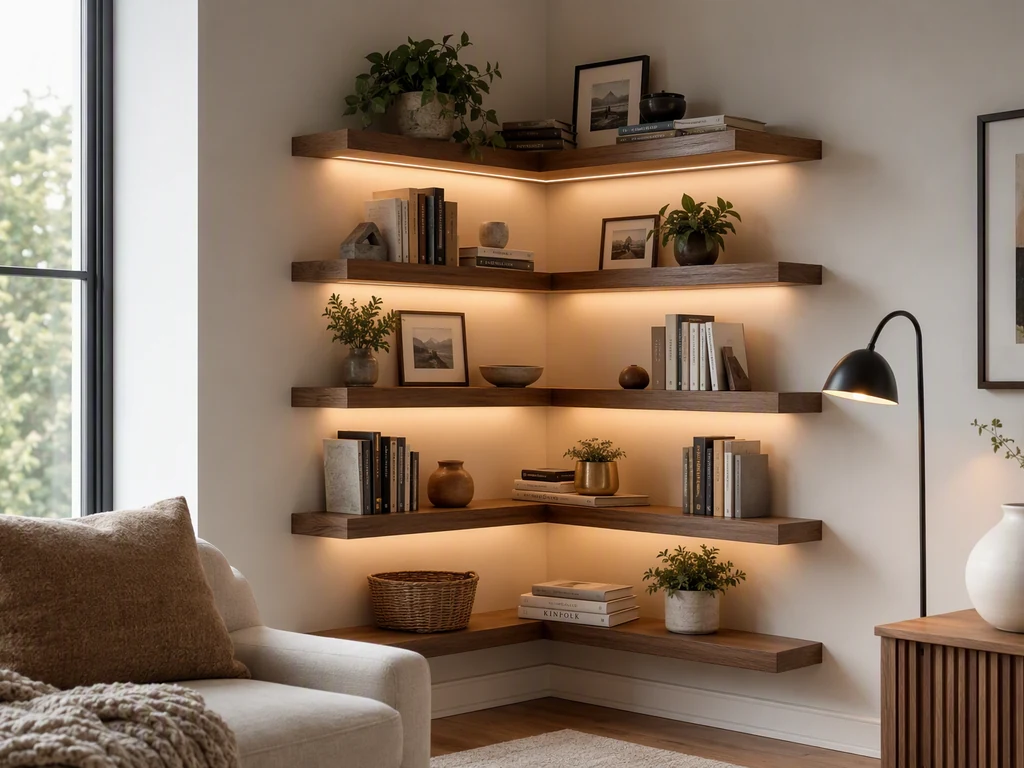
Corner Bookshelf Ideas by Shape and Access
Check whether the corner is square, interrupted by trim, close to a door, or partly blocked by furniture. Floating shelves keep the floor open, while an L-shaped unit offers more capacity but creates a deeper inside corner. Compare the six references for reach, shelf depth, wasted space, lighting, stability, and how the unit connects to seating or the two adjoining walls.
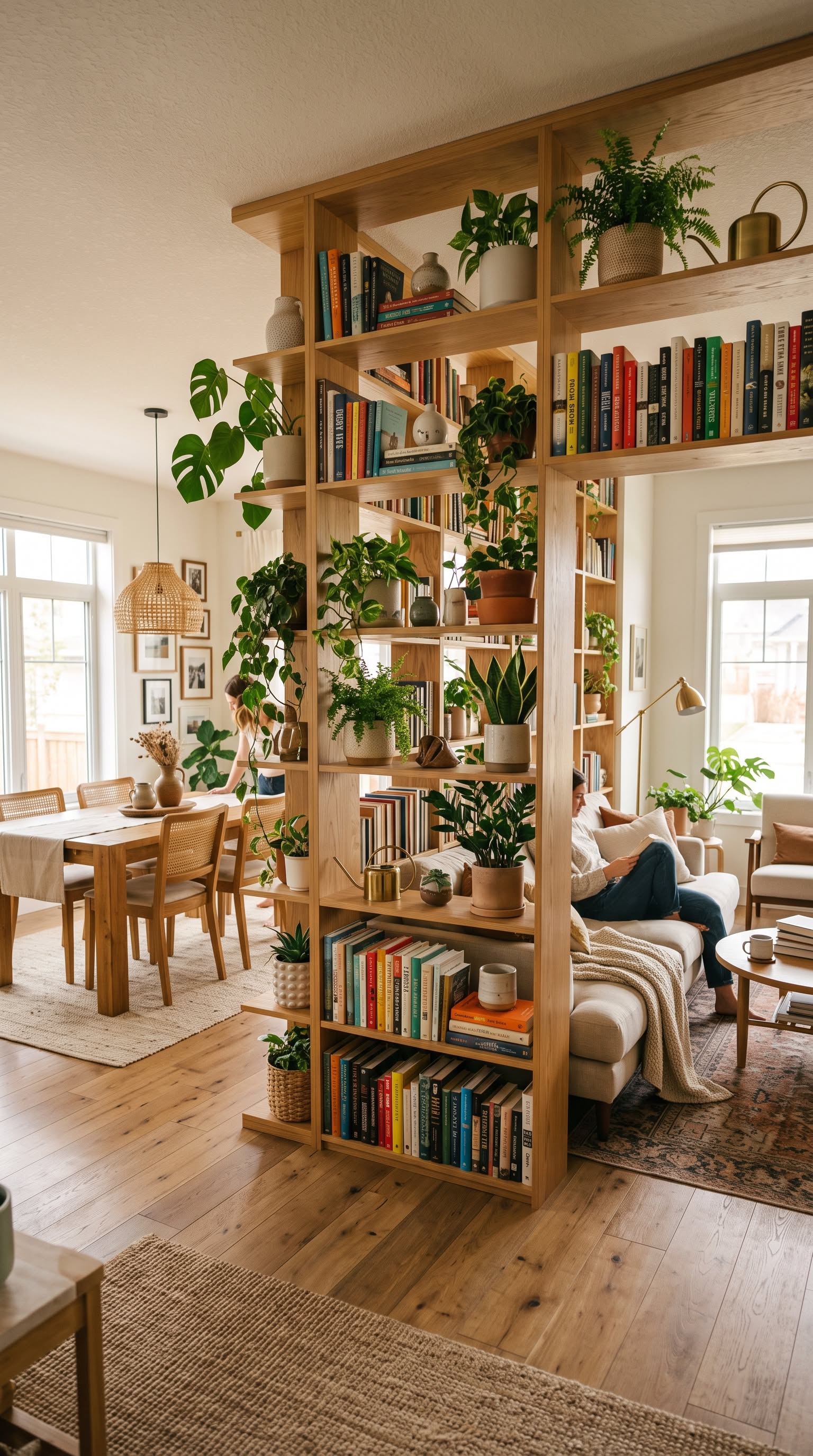
Combine Corner Form with a Practical Shelf Layout
Use one reference for the corner geometry and another for material, shelf spacing, or styling. Avoid merging several curved and angular systems in a small area. Keep heavy books on stable, accessible shelves, leave the deepest inside corner for larger objects or empty space, and ensure the arrangement does not interfere with doors or curtains.
How to Use a Corner for Bookshelf Storage and Display
Use floating shelves when a small display and open floor matter most, and an L-shaped or tall unit when book capacity is the priority. Curved shelves can soften the transition but may hold fewer standard books. Keep frequently used items within easy reach rather than deep in the inside angle.
Pair the corner unit with a chair and light for reading, use it beside a desk for reference storage, or treat it as a small display near a living area. Relating the bookshelf to an activity prevents the corner from becoming isolated storage with no comfortable access.
Frequently Asked Questions
What type of bookshelf works best in a corner?
Floating shelves provide a light display, L-shaped units use both walls, and triangular towers fit a compact footprint. The best form depends on book capacity, corner angle, wall strength, and nearby doors or furniture. Measure both walls and decide whether storage or open floor space is the main priority.
Are corner bookshelves good for small rooms?
Yes, when they use an otherwise empty angle without narrowing an important route. Tall or wall-mounted options can add storage with a small footprint, but deep wraparound shelves may make the corner feel heavier. Check reach, door swings, curtains, and the view from the room before adding maximum capacity.
How do I style corner shelves without making them look crowded?
Use fewer, larger groups and leave space around the inside angle. Distribute books by weight, repeat a small color or material palette, and avoid placing tiny objects on every level. A lamp or nearby chair can connect the shelves to the room more effectively than adding more decorative pieces.
Can corner shelves wrap around two walls?
Yes. Wraparound shelves can create useful continuity, but the inside joint, shelf depth, and fixing must be resolved carefully. Align key shelf levels, verify that books remain reachable, and avoid extending into windows, doors, or circulation. Technical spans and loads require measured design.
Can a generated corner bookshelf show safe construction details?
No. It can help compare shapes, materials, and room relationships, but it does not verify wall structure, shelf loads, spans, fixings, or exact corner angles. Measure the space and confirm anchoring, material thickness, access, stability, and construction with the relevant supplier or professional.