


Choose shape and scale from the table footprint and the room height, not from the electrical box alone. Check how the fixture looks when the table is extended and from adjacent rooms. The bottom edge should preserve views across the table while remaining visually connected to the dining zone.
Dining Room Lighting Ideas That Balance Function and Mood
Explore dining room lighting ideas for round, rectangular, and extendable tables. Compare pendants, chandeliers, linear fixtures, clusters, globes, and sconces by scale, height, spread, and glare. Select references that suit the table and ceiling proportions, then generate a coordinated lighting direction in PromeAI.
Explore Dining Room Lighting Ideas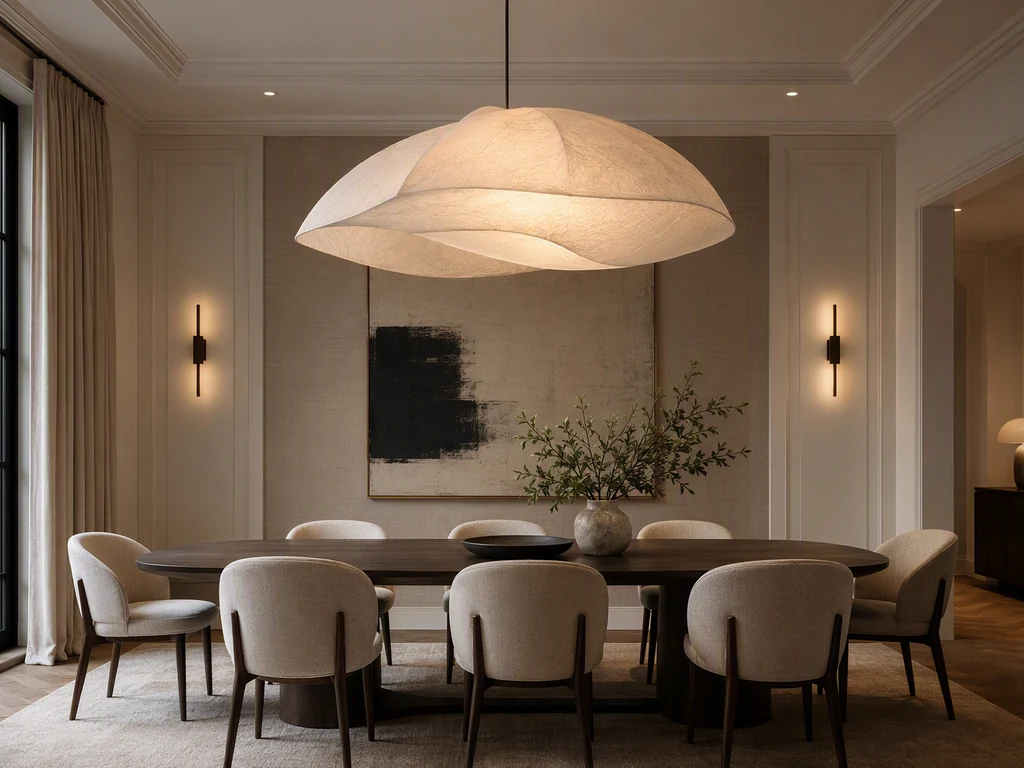
Dining Room Lighting Ideas by Table Shape and Scale
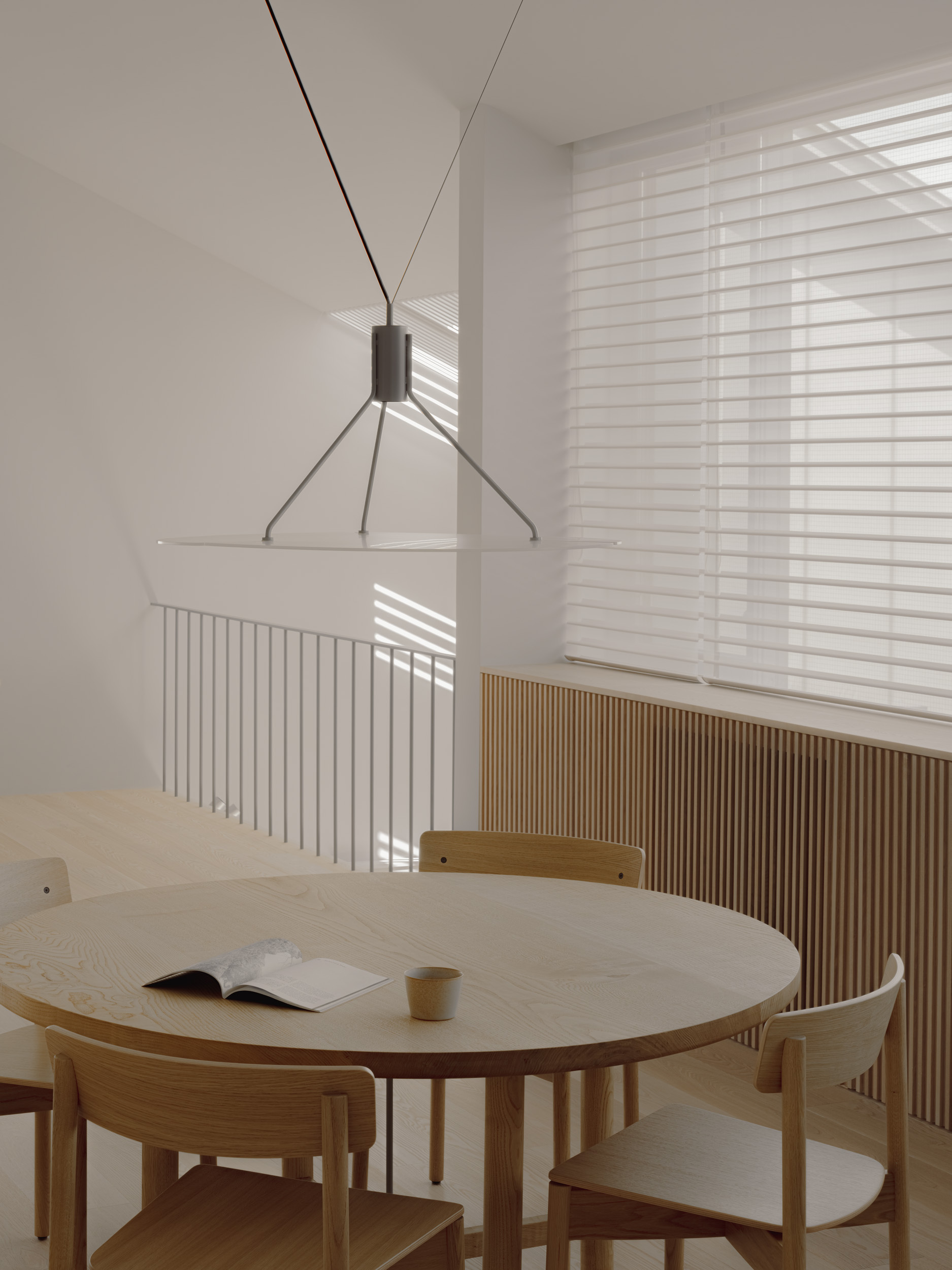
Center the main fixture on the table, even when the table is not centered in the room. A linear light can follow a long table, while a round chandelier or cluster often relates better to a circular table. Compare the six references for fixture width, hanging height, ceiling conditions, light distribution, dimming, glare, and the view across the table.
Combine a Table Fixture with Supporting Light
Use one reference for the main table light and another for ambient or wall illumination. Several statement fixtures at equal strength can overpower the dining area and create uneven brightness. Repeat a finish or shape, keep light color consistent, and ensure the decorative layer still provides comfortable faces, food visibility, and movement around the room.
How to Match Dining Room Lighting to the Table
Use sconces, lamps, or discreet ceiling light to prevent the perimeter from disappearing when the pendant is dimmed. Light artwork or a sideboard selectively rather than washing every surface equally. Separate controls make it easier to move between practical meals, cleaning, and softer gatherings.
Shield bright lamps from seated eye level and check reflections in glass tables, mirrors, and glossy surfaces. Confirm dimmer compatibility and the combined output of all layers. Ceiling support, wiring, and local electrical requirements must be verified independently from the visual concept.
Frequently Asked Questions
What type of light is best over a dining table?
Choose a fixture whose shape and light spread relate to the table: linear for many long tables, round or clustered for circular tables, and broad diffused light when visual comfort is the priority. The best option also depends on ceiling height, dimming, glare control, and the room's supporting light.
Should dining room lighting be centered over the table?
Yes, the primary fixture usually looks and works best centered on the table rather than the room. This keeps the dining zone coherent when the table is offset or the room is open plan. Confirm that the table position is stable before relocating wiring or selecting a fixture that depends on exact alignment.
How low should a dining room light hang?
It should feel connected to the table without blocking views or creating glare, but no single height fits every fixture and ceiling. Review the manufacturer's guidance, fixture depth, table width, and seated sightlines. Adjustable suspension is useful when the table or room use may change.
Can I combine a chandelier with wall sconces?
Yes. Let the chandelier define the table and use sconces for perimeter light, artwork, or atmosphere. Coordinate finish or form without requiring an exact match, and put the layers on suitable controls. Check that mirrors and glossy surfaces do not reflect exposed lamps directly toward diners.
Can I install lighting from a generated dining room image?
No. The image can guide fixture style, scale, and atmosphere, but it does not provide electrical loads, support details, circuits, exact illuminance, or code compliance. Confirm fixture specifications, wiring, dimmer compatibility, ceiling support, positioning, and installation with an appropriately qualified professional.