


Place the required settings and estimate room for serving dishes before adding decor. Mark the area a centerpiece can occupy without crowding elbows or plates. For everyday use, choose an arrangement that is easy to move or maintain rather than rebuilding a styled table for every meal.
Dining Room Table Decor Ideas That Leave Room to Dine
Explore dining room table decor ideas for everyday meals, dinner parties, and seasonal gatherings. Compare low centerpieces, candles, linens, ceramics, sculptural objects, and layered place settings by height and table space. Select references that suit the occasion and seat count, then generate a coordinated tablescape direction in PromeAI.
Explore Dining Room Table Decor Ideas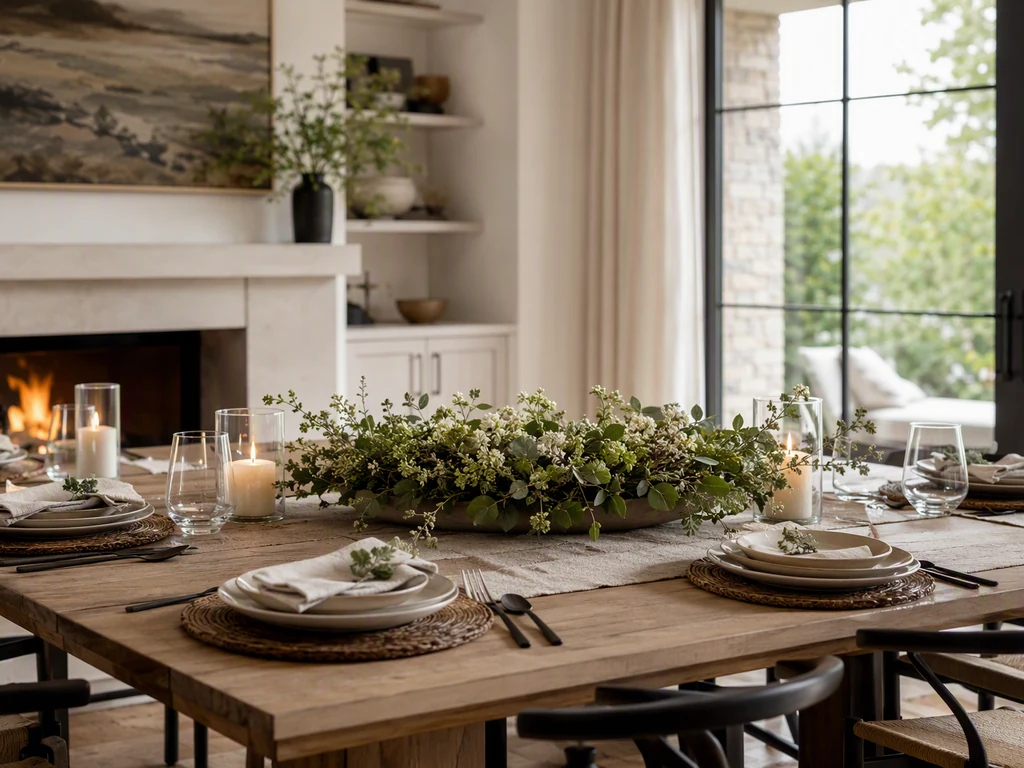
Dining Room Table Decor Ideas by Occasion and Height
Decide whether the table must remain ready for daily meals or can support a fuller event setting. Low arrangements preserve conversation, while tall pieces need enough openness beneath or around them to maintain sightlines. Compare the six references for centerpiece footprint, serving space, flame safety, color, repetition, clean-up, and how the decor changes when every place is occupied.
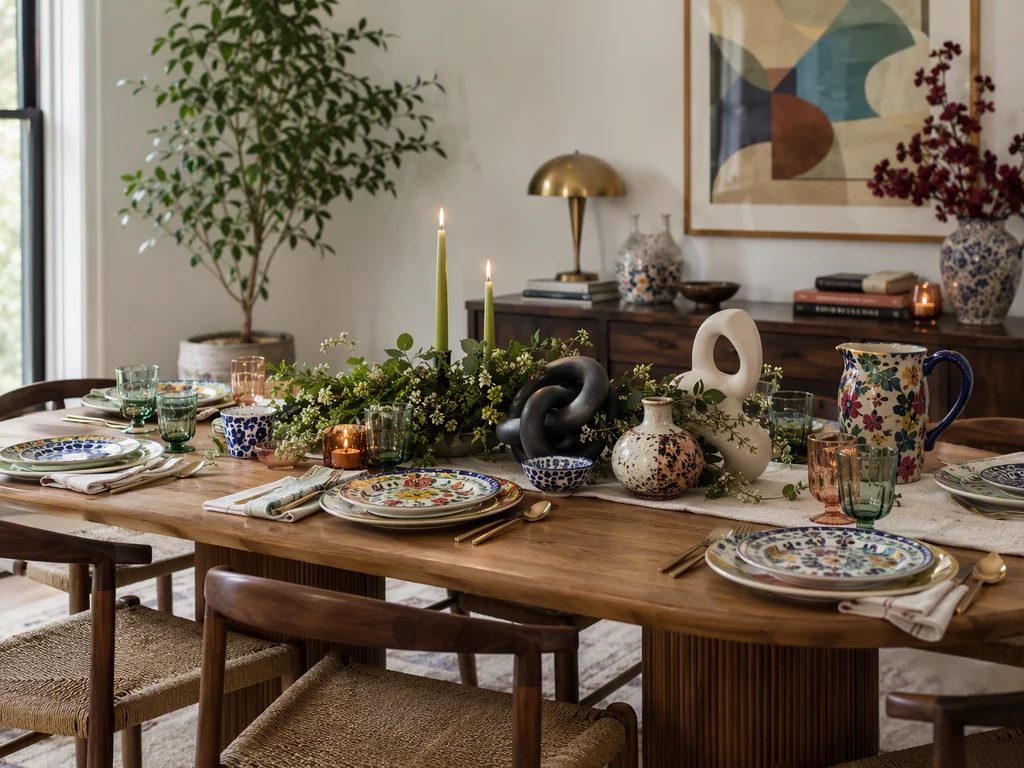
Combine a Centerpiece with Linens and Place Settings
Choose one reference for the central composition and another for textiles, glassware, or color. Keep one repeated motif and vary height without creating a wall between diners. The generated direction should leave credible room for plates and shared dishes; remove decorative layers when they interfere with serving, conversation, or the normal use of the table.
How to Build a Balanced Dining Table Setting
Repeat a material, color, or shape across the centerpiece, linens, and smaller accents. Odd-numbered groups and varied heights can create rhythm, but keep the overall silhouette low enough for conversation. Use restraint when patterned tableware or a strong table surface already provides visual interest.
Keep open flames stable and clear of greenery, sleeves, children, and serving activity. Choose washable textiles and durable surfaces for regular meals. A special event can carry more layers, but the setting should still make seating, pouring, and clearing straightforward.
Frequently Asked Questions
What should I put in the center of a dining table?
Use a low arrangement that fits the table and routine: flowers, branches, candles, fruit, ceramics, or a small group of sculptural objects. Leave room for place settings and serving. Everyday centerpieces should be easy to maintain or move, while event decor can be fuller when it does not block conversation.
How tall should a dining table centerpiece be?
Keep it below normal sightlines or intentionally high with open space beneath, so diners can see one another. The correct height depends on table width, seating, and the arrangement's density. Test it from a seated position; an attractive centerpiece that interrupts conversation is too dominant for the meal.
How do I decorate a dining table for everyday use?
Choose one durable, low-maintenance focal element and leave most of the surface usable. A tray can group small objects and move quickly at mealtime. Repeat color through a runner, bowl, or vase without setting every place permanently. Everyday decor works best when clearing the table is not a project.
Can I mix different tableware and decor styles?
Yes. Connect mixed pieces through one shared color, material, shape, or level of formality. Let one pattern lead and keep the other layers quieter. Variation can feel collected and personal, but too many unrelated motifs, metals, and heights can make the table look crowded before food is served.
How can I adapt a generated tablescape to my event?
Match the reference to your table shape, seat count, serving style, and occasion. Reduce the centerpiece footprint if food will be shared at the table, and replace unsafe candles or delicate materials where needed. Confirm actual object sizes, flame safety, food contact, laundering, and venue rules before setup.