


Record light direction, flooring, existing furniture, architecture, and practical needs that will remain. Include these constraints in the board so the direction is not based on a blank ideal room. Decide the desired atmosphere in plain language before collecting many images.
Interior Design Mood Board That Connects Palette, Furniture, and Finish
Explore interior design mood board directions that connect palette, materials, furniture, lighting, and atmosphere. Compare warm modern, soft minimal, eclectic, dark luxury, coastal, and rustic concepts by the decisions they coordinate. Select references that suit the room and constraints, then generate a focused interior direction in PromeAI.
Explore Interior Design Mood Board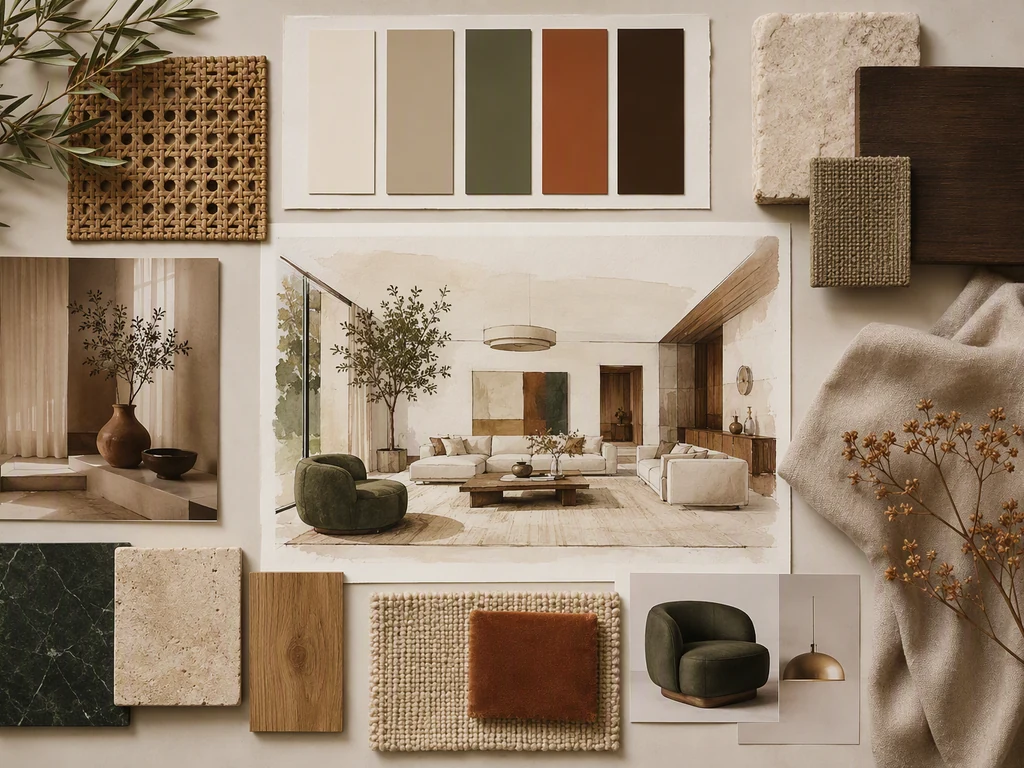
Interior Design Mood Boards by Palette and Material Logic
Begin with fixed room conditions and the feeling the space must support. A useful board shows how flooring, wall color, wood, metal, textiles, furniture form, and light relate rather than displaying isolated products. Compare the six references for undertone, texture, contrast, durability, daylight, and whether the material combination can remain coherent across a complete room.
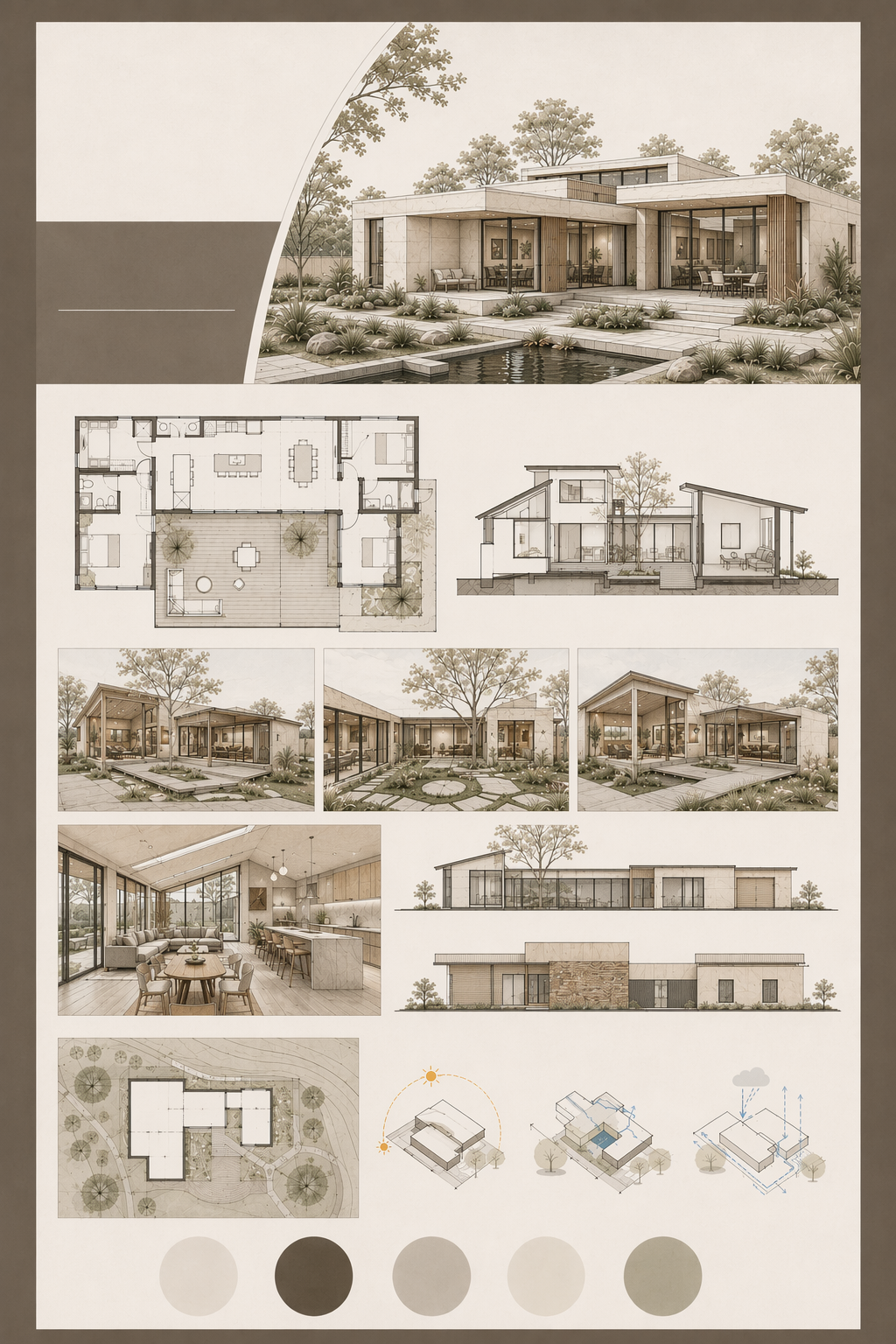
Combine Interior References into One Material Story
Use one board to set the dominant atmosphere and others for a specific furniture shape, accent color, or finish. Keep undertones compatible and limit the number of competing woods, metals, and statement textures. The combined direction should help reject unsuitable options as clearly as it identifies appealing ones.
How to Build an Interior Design Mood Board
Choose flooring, wall, major furniture, and large textile relationships first. Add metals, small accents, and decorative objects afterward. Compare samples at similar scale and under relevant light; a tiny color chip can misrepresent how a full wall or sofa will influence the room.
Test proposed furniture, paint, fabric, and lighting against the board. If every option seems compatible, the direction is too broad. Refine the anchor images and written criteria, then verify dimensions, performance, budget, availability, and licensing separately from the visual concept.
Frequently Asked Questions
What should an interior design mood board include?
Include the room's desired atmosphere, key colors, flooring or wall cues, furniture forms, textiles, materials, lighting, and a few supporting details. Fixed elements should also appear when they affect the scheme. The board should show relationships, not become a shopping list of unrelated products.
How do I choose colors for an interior mood board?
Start with fixed flooring, daylight, and one dominant material or image. Build a base, supporting tones, and a limited accent palette, then compare undertones across wood, paint, fabric, and metal. Physical samples under room lighting are still required before final color decisions.
Should furniture products appear on a mood board?
They can, when a product represents an important form, proportion, or material. Avoid filling the board with items before the overall direction is clear. Separate inspiration from approved specification, because availability, dimensions, comfort, price, and licensing still need independent confirmation.
Can I combine several interior styles in one mood board?
Yes. Choose one style or atmosphere as the base and borrow limited elements from others through shape, material, or color. Maintain common proportions and undertones. Combining complete style packages at equal strength often creates a board that cannot guide consistent room decisions.
Can a generated interior mood board replace material samples?
No. It can organize color and material relationships, but screens and generated imagery do not reproduce exact sheen, texture, scale, durability, or color. Use the board to define intent, then review physical samples, furniture dimensions, performance, availability, budget, and installation requirements in the real space.