


Identify the main solid forms, recesses, cantilevers, and roof planes before selecting finishes. Use changes in depth to mark the entry, shade openings, or create privacy. A strong modern direction remains readable in simple light and shadow without depending on decorative surface patterns.
Modern Home Exterior Directions with Clear Massing and Detail
Explore modern home exterior ideas through massing, openings, material contrast, and landscape. Compare timber and concrete, white geometric volumes, dark metal, stone and glass, courtyards, and soft minimalist facades by proportion and detail. Select compatible references, then generate a coordinated modern direction in PromeAI.
Explore Modern Home Exterior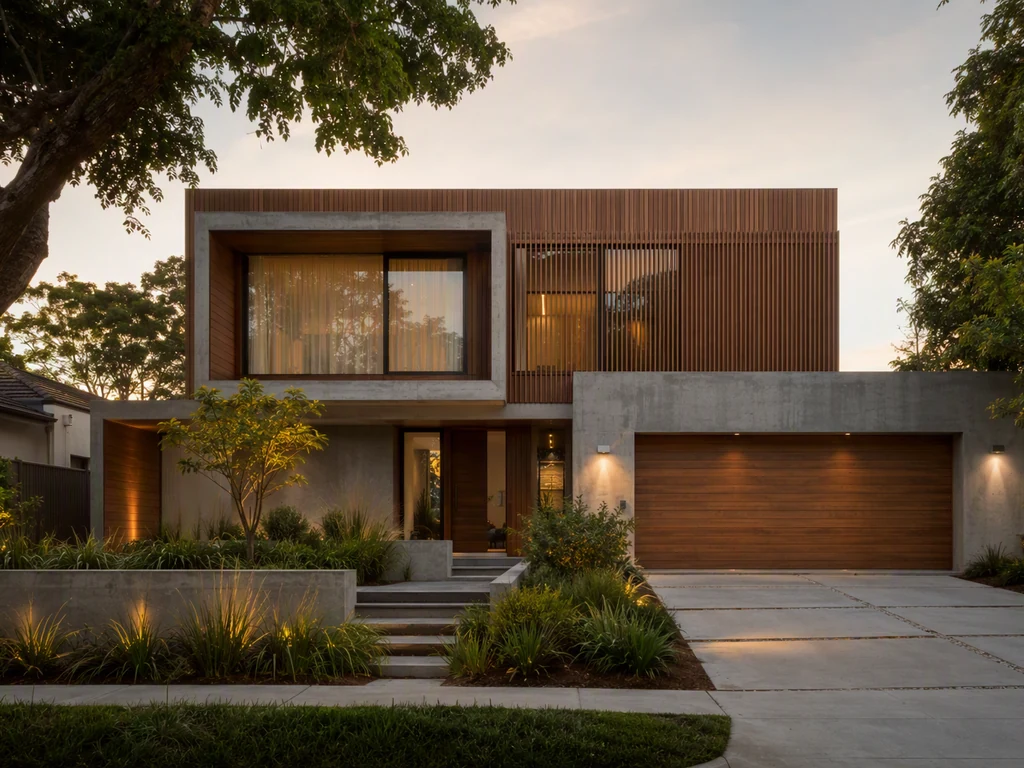
Modern Home Exterior Ideas beyond a Single Material
Modern character comes from clear volume, disciplined openings, shading, and precise material transitions, not simply from white walls or large glass. Compare the six references for roofline, depth, solid-to-glass balance, privacy, entry emphasis, weathering, and how landscape softens or extends the geometry. Choose examples whose complete architectural logic can coexist.
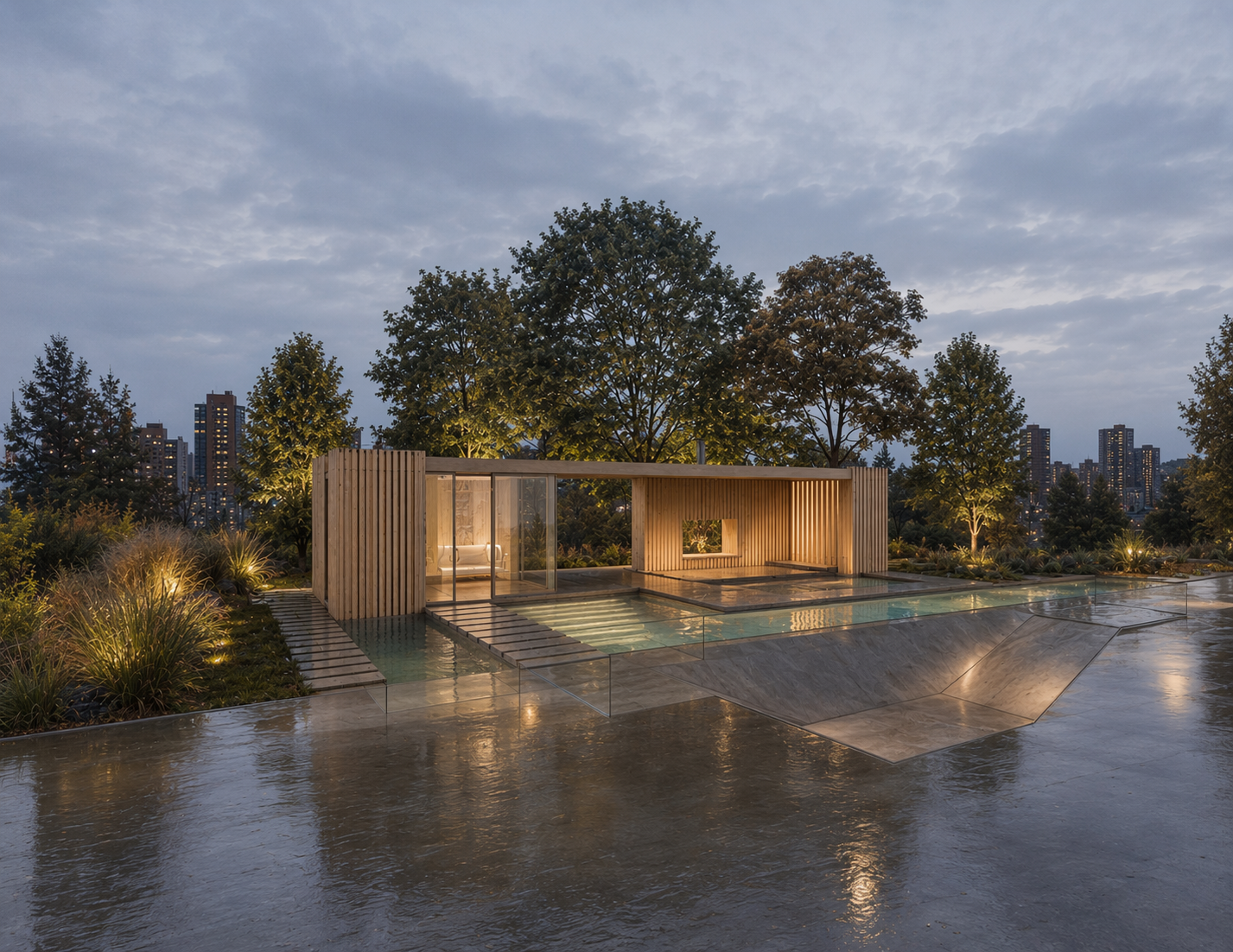
Combine Modern Massing, Openings, and Material Contrast
Let one reference control the primary volumes and another guide glazing, cladding, or landscape. Keep joints and transitions aligned with believable corners, recesses, and structural lines. One warm or textured material can balance smooth surfaces, while too many accents weaken the clarity that makes a modern exterior feel intentional.
How to Build a Modern Exterior Direction
Treat window size and placement as part of the composition while accounting for views, solar exposure, shading, and interior privacy. Large glazing is not automatically more modern or appropriate. Repeat proportions and align key edges so the openings support the volumes rather than appearing scattered.
Assign timber, stone, metal, concrete, or render to complete volumes or defined planes. Review samples for weathering, joint scale, and color in sun and shade. Landscape can soften hard geometry and frame the approach, but should not conceal the entry or the main architectural relationships.
Frequently Asked Questions
What makes a home exterior look modern?
Clear massing, purposeful openings, restrained material transitions, and integrated shading usually matter more than one fashionable finish. Modern exteriors often use simple volumes and limited palettes, but they still respond to climate, privacy, and the site. Consistent detailing gives the design clarity at both large and small scales.
What materials work well on a modern exterior?
Timber, stone, metal, concrete, glass, brick, and render can all work when their joints and transitions support the building form. Choose by climate, maintenance, durability, fire and moisture performance, availability, and detail requirements. A visual reference shows relationships, not proof that a specific material suits a project.
Can a modern exterior use warm colors?
Yes. Warm timber, muted earth colors, bronze metal, brick, or warm stone can soften simple geometry without reducing modern character. Keep the palette controlled and repeat colors across complete architectural elements. Modern design depends on proportion and detail, not on restricting every facade to white, gray, or black.
How do I mix materials on a modern facade?
Give each material a defined role and end it at a corner, recess, opening band, or complete volume. Use one dominant finish and fewer accents, then coordinate joints, trim, and window frames. Avoid arbitrary patches whose edges have no relationship to the architecture or weather protection.
Does a generated modern exterior include technical specifications?
No. It communicates a visual direction but does not identify verified products, dimensions, structure, envelope layers, drainage, energy performance, approvals, or construction details. Confirm the concept against site, climate, code, materials, and professional documentation before treating any visible feature as technically resolved.