


Map door swings, radiators, switches, and handles before adding any furniture. If the route is already tight, use wall-mounted storage or decor and reserve the floor for circulation. The most attractive console is still the wrong choice if people must turn sideways to pass it.
Narrow Hallway Ideas for a Lighter, Clearer Passage
Explore narrow hallway ideas for tight passages where every projection affects movement. Compare shallow consoles, mirrors, tonal walls, continuous runners, vertical lighting, and end-wall artwork by the width they preserve. Select references that address proportion and circulation, then generate a coordinated visual direction in PromeAI.
Explore Narrow Hallway Ideas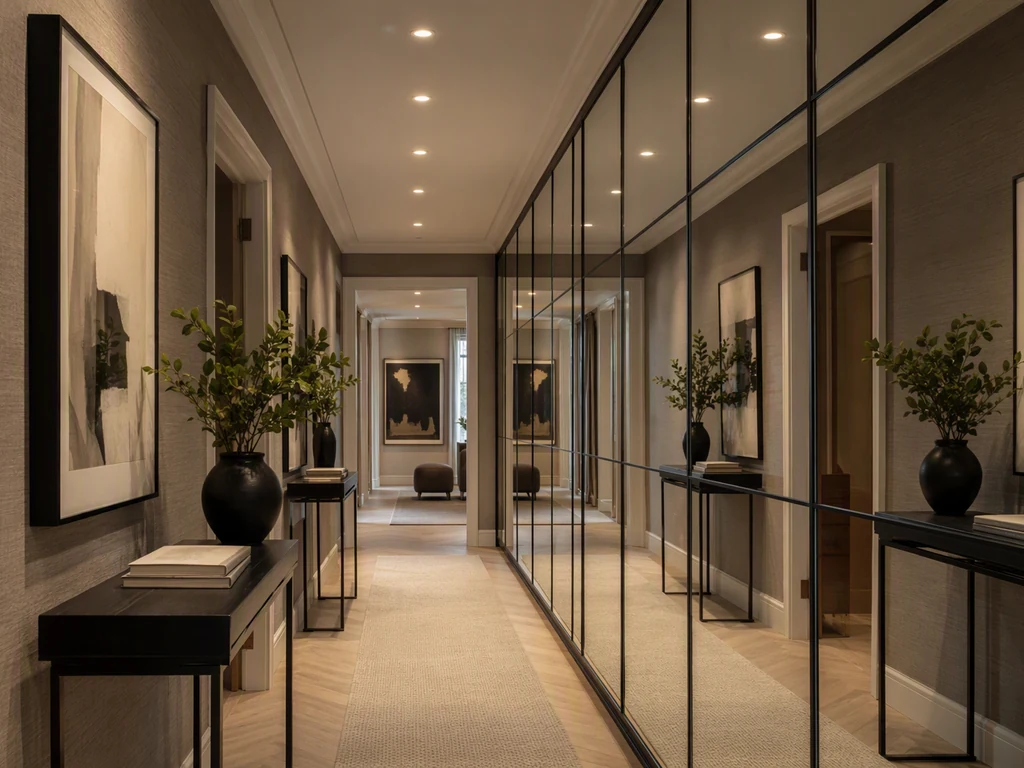
Narrow Hallway Ideas That Preserve Usable Width
Measure the tightest point, including radiators, trim, door handles, and furniture when drawers are open. Wall-mounted decor, directional lighting, and a runner can change the experience without reducing the path, while even a slim console may be unsuitable at a pinch point. Compare the six references for depth, brightness, vertical emphasis, reflected views, and the visual pull toward the end wall.
Combine Light, Reflection, and a Strong End View
Use one reference to set the spatial strategy and others to support it with color or rhythm. Mirrors work best when they reflect light or a calm view, not a cluttered doorway; pale walls help only when the lighting is adequate. Keep side-wall details shallow and place the strongest contrast at the end when you want the passage to feel more purposeful.
How to Make a Narrow Hallway Feel More Considered
A continuous runner, repeated lights, aligned frames, or vertical paneling can create rhythm without adding depth. Keep spacing deliberate and avoid many small interruptions. A focal point at the end of the hall can shorten an overly long view while giving the passage a clear destination.
Layer ambient light with wall washing or sconces so the hallway does not depend on one harsh ceiling source. Use lighter large surfaces when natural light is limited, then place contrast in artwork, doors, or the end wall. Mirrors should improve the view or light distribution rather than multiply visual clutter.
Frequently Asked Questions
How can I make a narrow hallway look wider?
Keep the floor path visible, reduce projecting furniture, and light the walls rather than only the center of the ceiling. A well-placed mirror can extend light when it reflects an uncluttered view. Continuous color and fewer visual breaks also help, but preserving actual usable width matters more than any optical effect.
What colors work best in a narrow hallway?
Light or mid-tone colors are reliable when the hallway lacks daylight, but dark colors can work with sufficient layered lighting and a deliberate end view. The key is consistent treatment across the largest surfaces. Too many contrasting stripes, doors, or small accent walls can fragment an already tight passage.
Can I put furniture in a narrow hallway?
Yes, only when it leaves a comfortable and safe route with doors and drawers open. Choose an ultra-shallow console, floating shelf, or wall-mounted cabinet and verify the tightest point. In very narrow passages, artwork, lighting, or a runner can provide function and character without occupying floor width.
Should I use a mirror in a narrow hallway?
A mirror can help when it reflects daylight, artwork, or an open room, but it is not automatically beneficial. Check the view from both ends and avoid reflecting clutter, glare, or another blank narrow wall. A large simple mirror usually creates a calmer effect than several small mirrors with competing frames.
How do I choose references for my narrow hallway?
Prioritize examples with a similar width, door pattern, and light level. Select one spatial strategy first, such as wall washing, a runner, or an end-wall focal point, then add supporting color or decor references. Generated results are conceptual; confirm clearances, electrical positions, fixings, and rug safety before implementation.