


Japanese Restaurant Interior Design for Every Dining Style
Find Japanese restaurant interior design ideas for intimate sushi counters, lively ramen bars, relaxed izakayas, private tatami rooms, and modern dining spaces. See how seating, entrances, materials, and lighting shape the experience, then download images free or create your own design with AI.
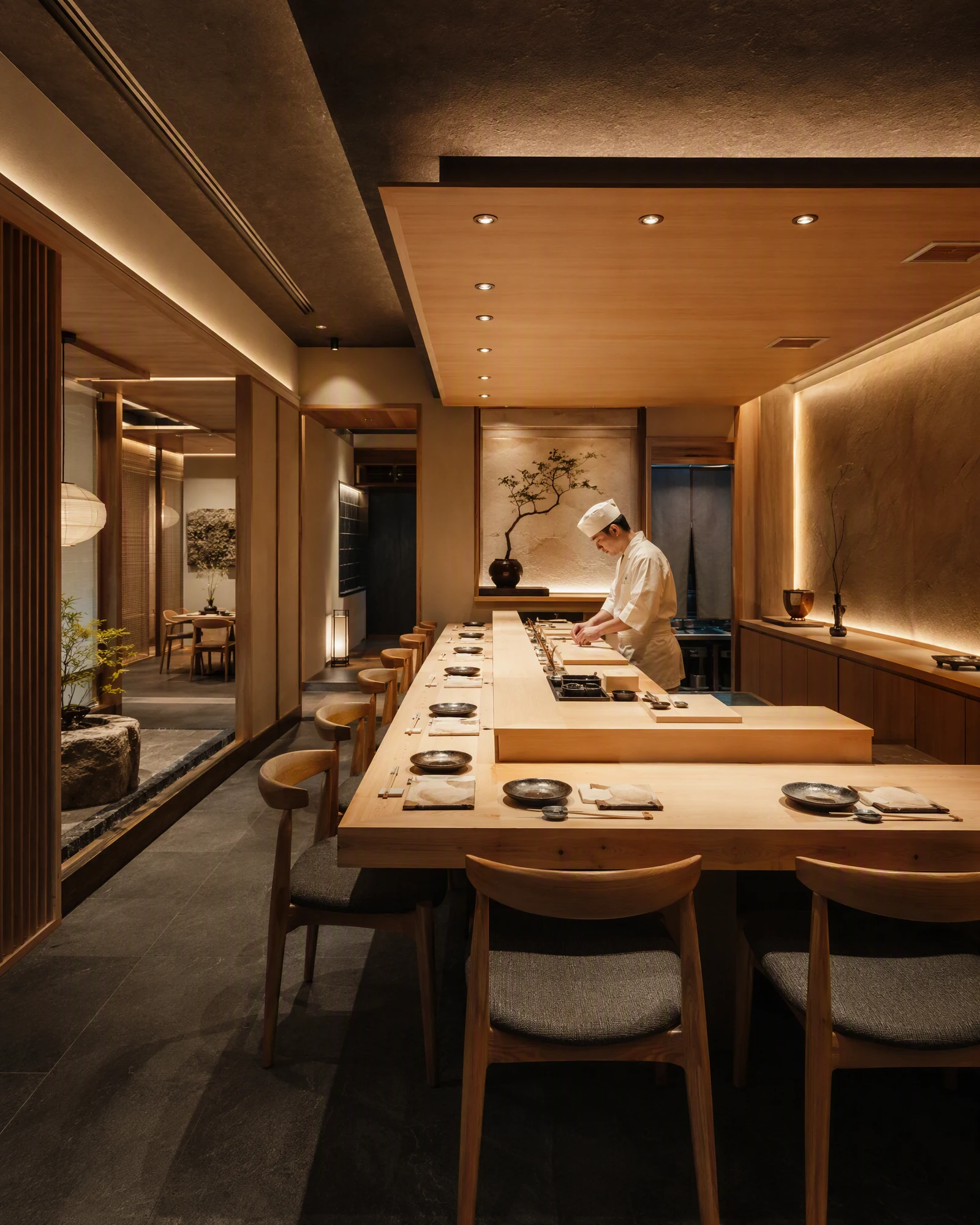
Intimate Japanese sushi counter with close chef-guest interaction, pale timber, focused lighting, and restrained details
Let the dining format shape the room
A sushi counter brings guests close to the chef and turns preparation into part of the meal. A ramen bar needs a faster rhythm and compact seating, while an izakaya can feel busier and more social through booths, signs, layered light, and shared tables.
Private tatami dining calls for quieter thresholds and more enclosure. A Japanese cafe or modern fine-dining room can use lighter space, fewer details, and longer views to create a different pace.
Combine wood, stone, screens, and color with restraint
Timber can bring warmth, stone can give weight, and screens can filter views without fully closing the room. Use them to support the dining experience instead of treating every Japanese reference as decoration.
Traditional spaces may favor craft, tatami, and measured proportions. Contemporary interpretations can introduce concrete, metal, and sharper geometry while keeping the palette controlled and the details purposeful.
Connect the entrance, counter, seating, and light
A noren, lantern, framed doorway, or glimpse of the counter can signal the experience from the street. Inside, seating density and sightlines should suit the venue, whether the focus is chef interaction, quick meals, private conversation, or an open kitchen.
Focused light can bring attention to food and craft, while softer light supports private dining. Start from a visual direction you like and use AI to test another cuisine format, seating arrangement, material balance, or mood.
Frequently Asked Questions
Find More Restaurant and Hospitality Design Ideas
Build the Atmosphere Around the Meal
Choose the dining rhythm first, then bring the seating, materials, entrance, and lighting into one clear idea.

Technischer Support: tech@promeai.pro
Geschäftskooperation: business@promeai.pro