

Fashion Illustration with Gesture, Style, and Personality
See how pose, line, color, and exaggeration turn clothing into an expressive image. Compare watercolor, marker, pencil, and digital approaches for runway, editorial, and portfolio work, then download an image free or create your own with AI.
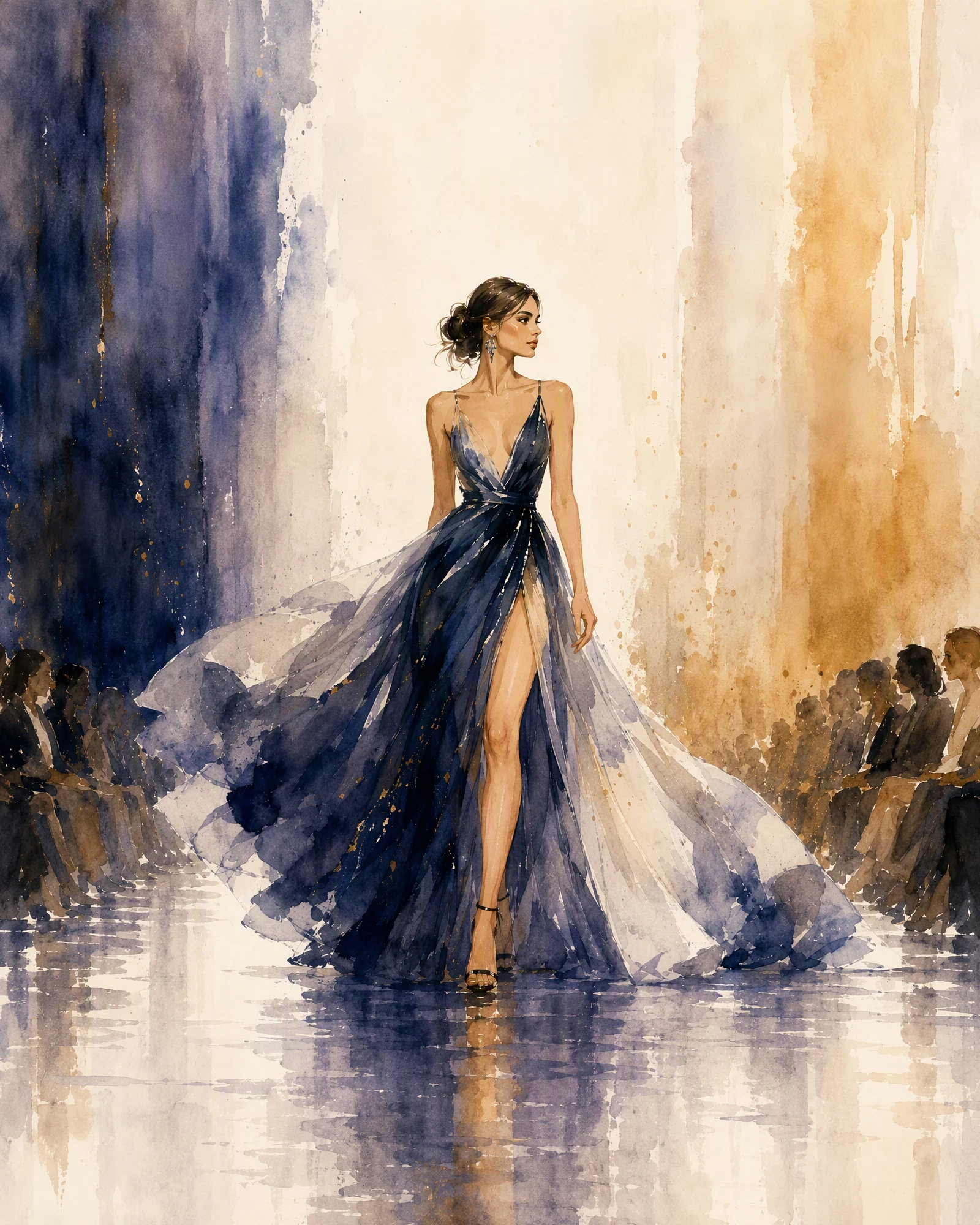
Editorial watercolor fashion illustration of a dramatic runway gown
Decide what the illustration needs to communicate
An editorial illustration can prioritize atmosphere and attitude, while a design presentation needs the garment silhouette and key details to remain clear. Runway work often uses a strong gesture to suggest movement.
Choose the audience and purpose before deciding how much realism, background, texture, and accessory detail to include.
Match the medium to the fashion mood
Watercolor creates soft transitions and flowing fabric, marker produces bold color and clean shadows, and pencil keeps the focus on line and form. Digital illustration can combine crisp edges, painterly texture, and rapid palette changes.
The strongest style supports the garment rather than hiding it. Preserve a readable silhouette even when the face, limbs, or setting become expressive.
Use a croquis without letting it control the result
A croquis provides proportion and pose, but the illustration becomes individual through gesture, clothing, hair, accessories, palette, and mark-making. Adjust the figure when the garment needs a different stance or sense of weight.
Download a visual reference free, or create a fresh illustration with AI by changing the pose, outfit, medium, editorial mood, or background treatment.
Frequently Asked Questions
Move from Figure Study to Fashion Presentation
Give the Garment a Voice Beyond the Hanger
Keep the clothing readable, then use gesture, color, and medium to set its attitude.

Soporte técnico: tech@promeai.pro
Colaboración empresarial: business@promeai.pro