

Black and Grey Tattoos Built with Tone and Contrast
Compare realistic and illustrative black-and-grey tattoos, from small pieces to sleeves, across different motifs, placements, and skin tones. Download any image free or create your own grayscale tattoo direction with AI.
A black-and-grey realism portrait tattoo with dramatic side light, smooth tonal transitions, and a clean skin break
Distinguish black and grey from solid blackwork
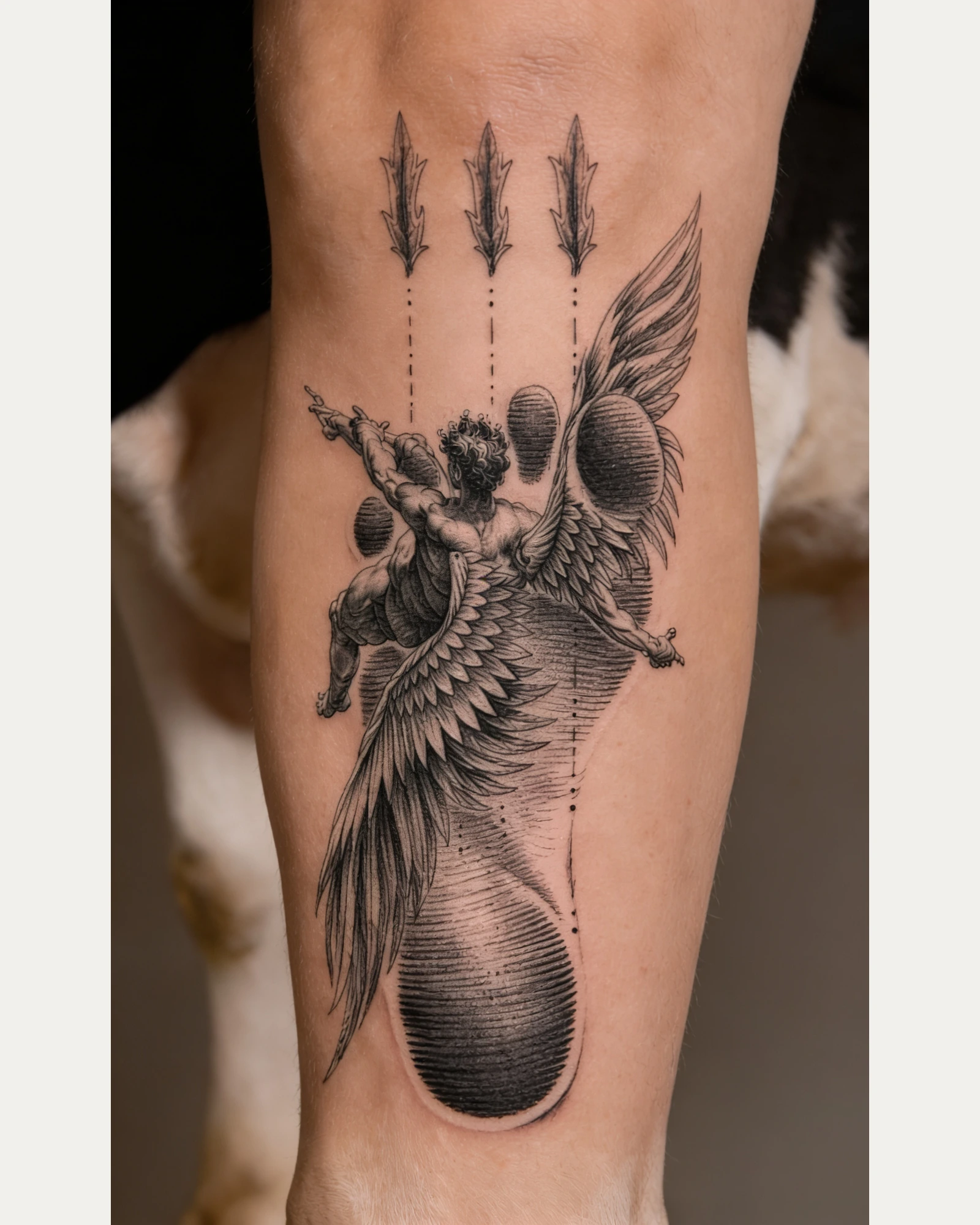
Black-and-grey tattooing builds form with diluted black ink, gradients, soft transitions, and untouched skin. Blackwork relies more heavily on solid black shapes and high-contrast pattern, although some designs combine both approaches.
Realism, portraiture, florals, wildlife, religious imagery, and illustrative subjects can all use black-and-grey tone differently.
Plan contrast for scale, placement, and skin tone
Small pieces need simpler value groups so details do not merge. Sleeves can layer foreground, middle ground, and background, but still need strong focal contrast.
Black-and-grey tattoos can work on dark skin when the artist plans readable value separation, appropriate scale, and skin breaks instead of relying on pale highlights that are not present in the skin.
Judge the design by how it may heal, not only fresh ink
Fresh black-and-grey tattoos often look darker and sharper than healed work. Fine transitions soften over time, so clear structure matters more than temporary surface contrast.
Use these images for visual direction, then ask an experienced tattoo artist about healed examples, final sizing, placement, skin response, and aftercare.
Frequently Asked Questions
Compare Grayscale Tattoo Styles and Formats
Build the Design with Light, Shadow, and Skin
Choose the tonal direction you like, then adapt its contrast and scale for the final placement.