


Create a Private Style and Material Language for Your Firm
Extract recurring visual principles from the firm’s reference projects, palettes, brand rules, and exclusions, then publish them as a reusable profile for future design generation.
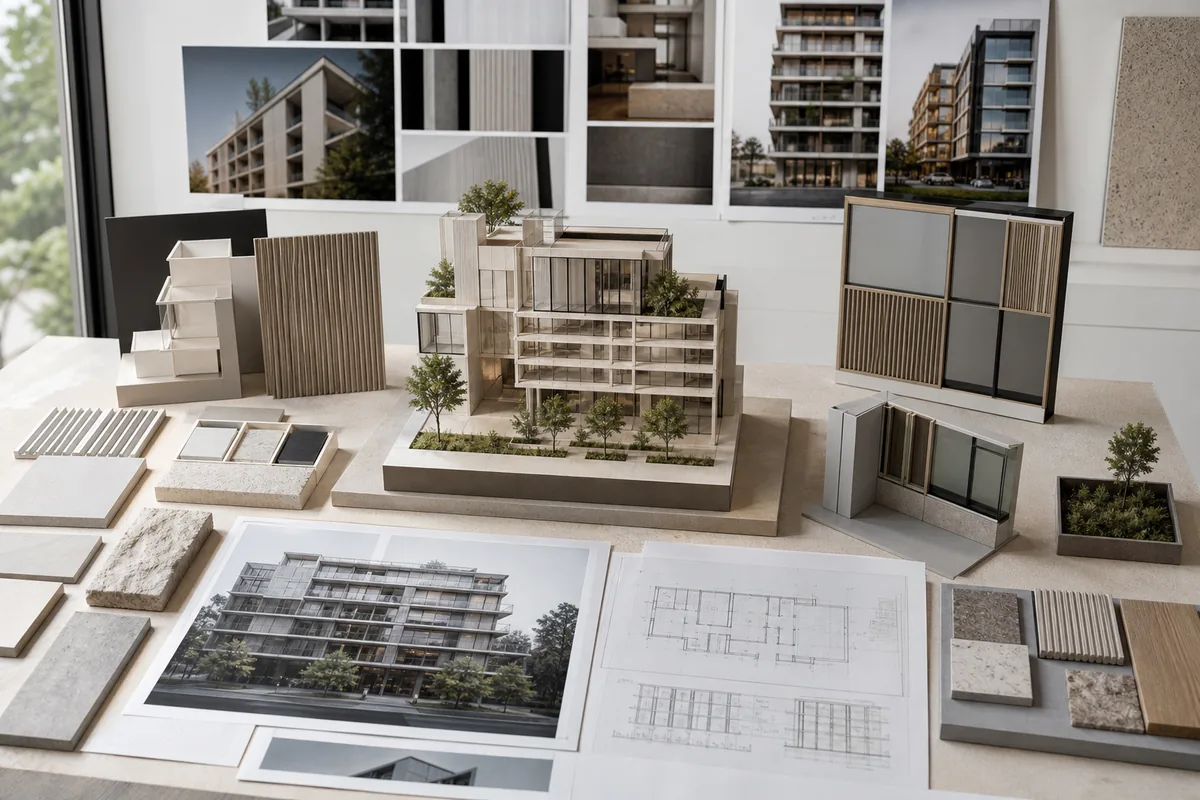
See the Workflow Run
The actual workflow — connected nodes you can run to preview each step.
Where a Private Style Profile Improves Consistency
Professional capabilities powered by AI.

Brief New Team Members
Give collaborators a practical visual reference for the firm’s preferred design and presentation language.

Guide Repeated Image Generation
Apply shared material, atmosphere, and styling principles across projects without rebuilding the prompt from memory.

Protect Brand Differentiation
Make generic trends and unwanted visual clichés explicit before they appear in client-facing work.
Extract Principles Instead of Copying Projects
A useful style system identifies repeatable relationships—such as material restraint, color behavior, detail density, or lighting character—rather than imitating one reference image.
Include counterexamples and forbidden directions. Positive adjectives alone often remain too broad to distinguish the firm from common architectural imagery.
Review the profile as the practice evolves. New approved projects may clarify the language, while temporary trends should not automatically become permanent brand rules.
Frequently Asked Questions
Turn the Firm’s Visual Identity into Reusable Guidance
Capture the materials, forms, atmosphere, and exclusions that should shape future design imagery.

Technical support: tech@promeai.pro
Business collaboration: business@promeai.pro