

Concept Sketches That Make Early Ideas Visible
See rough and developed concept sketches across products, architecture, interiors, vehicles, furniture, fashion, and environments. Compare alternatives, download any image free, or create your own concept direction with AI.
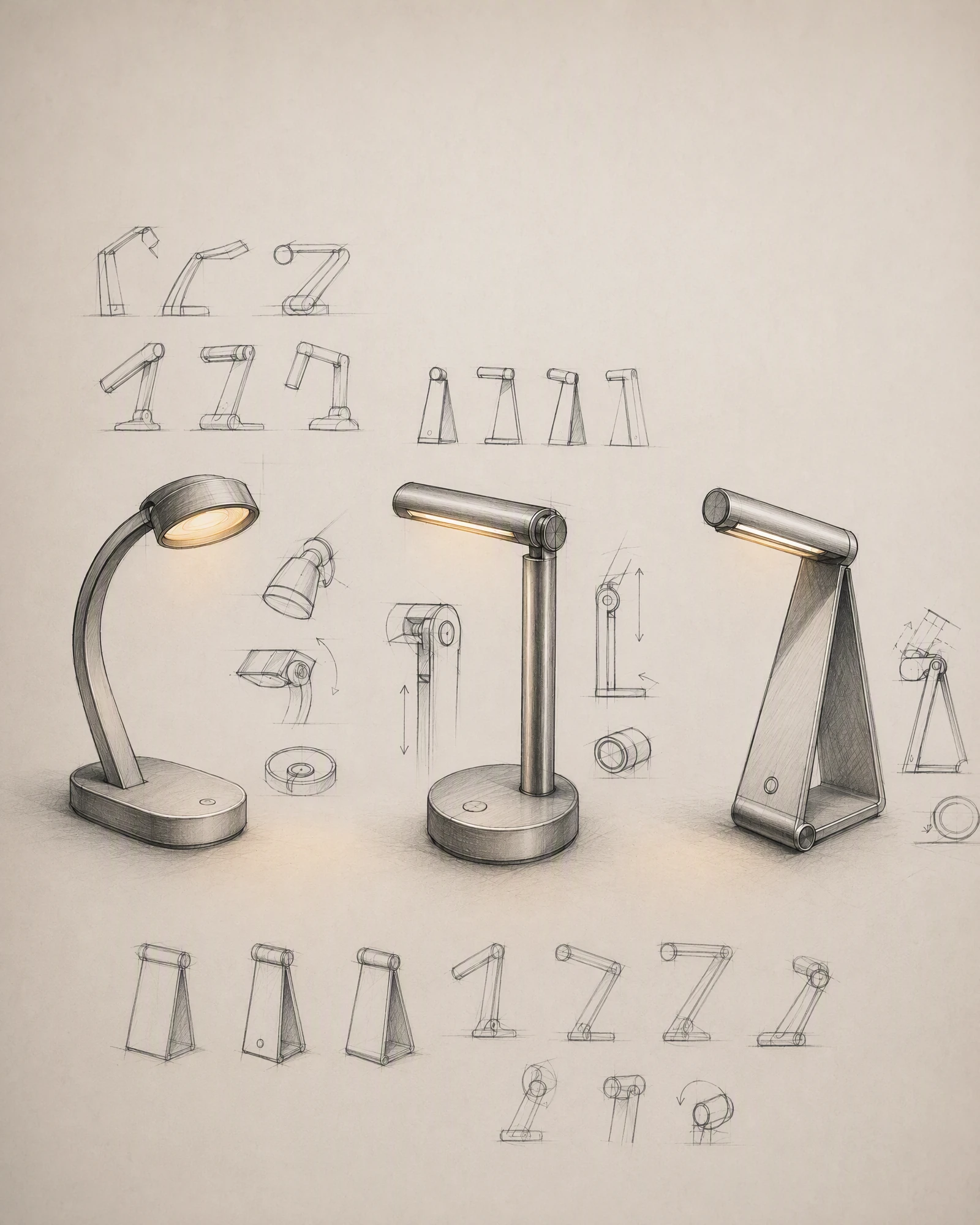
Rough-to-developed sketches exploring three forms for a compact desk lamp
Use sketches to compare, not just present
An early concept sketch should make alternatives cheap to test. Change the massing, mechanism, layout, silhouette, or user relationship across several small studies before polishing one result.
The goal is to expose decisions and questions, not to make every line look finished.
Move from rough form to a developed direction
Begin with gesture, proportion, and the main functional relationship. The next pass can clarify materials, movement, access, structure, or interaction through selected details and simple value.
Keep the views relevant to the idea: a product may need grip and mechanism studies, while an interior needs layout, circulation, and focal-point comparisons.
Make the concept understandable without overexplaining
Use line weight, arrows, simple diagrams, color blocks, and a few visual cues only when they clarify the idea. A strong sketch can communicate the hierarchy before labels are added.
AI can help generate and compare visual alternatives, but the results remain concept imagery rather than measured drawings, engineering, or production documentation.
Frequently Asked Questions
Develop Another Kind of Design Study
Keep the Sketch Loose Enough to Change the Idea
Compare the important decisions first, then develop only the direction that earns more detail.